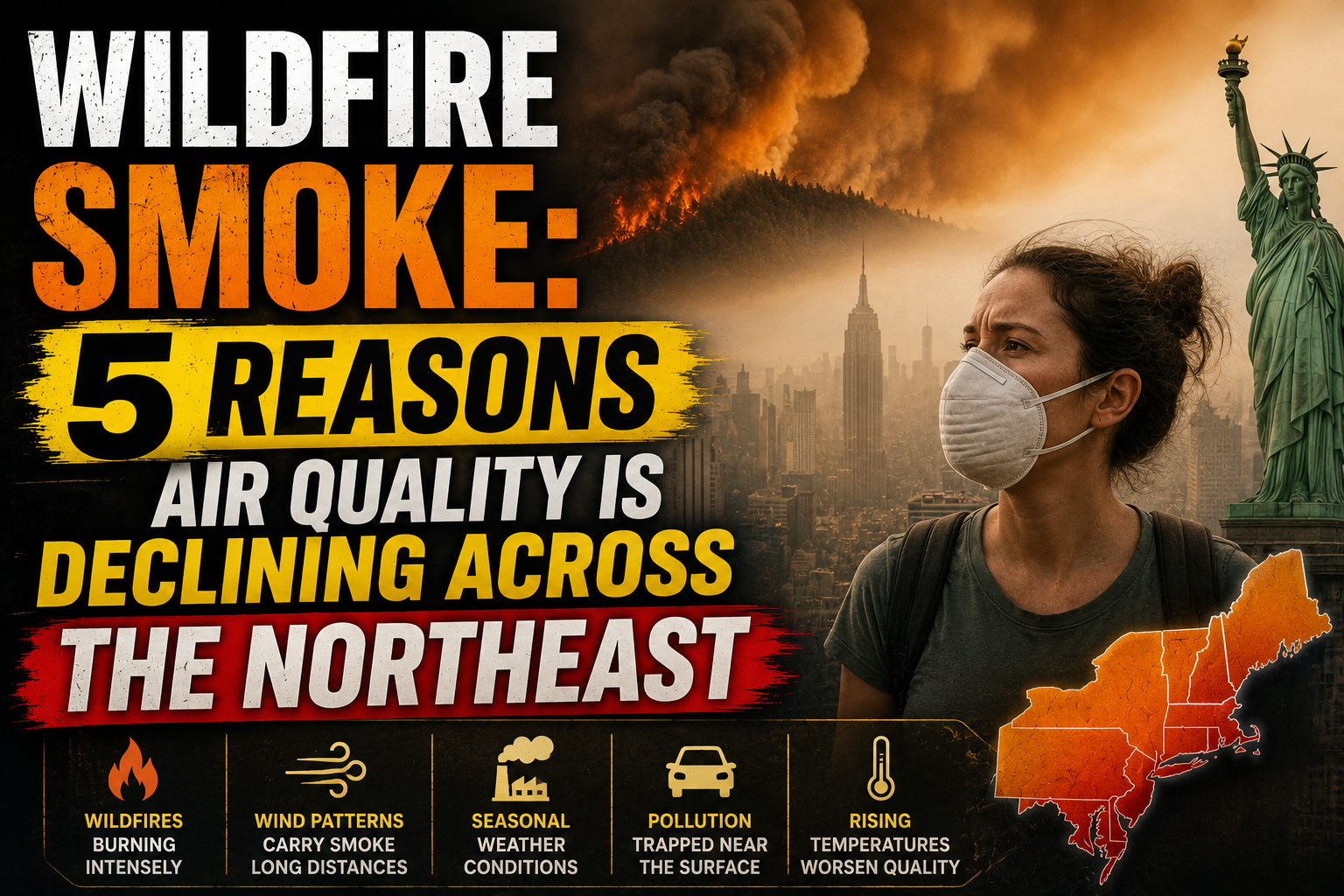
Wildfire Smoke Spreads Across the Northeast
Wildfire Smoke is affecting air quality across parts of the northeastern United States as smoke from ongoing Canadian wildfires drifts into the region. Weather experts say atmospheric conditions are allowing the smoke to remain closer to the ground, reducing visibility and creating hazy skies in several major cities.
Residents in some areas have been advised to monitor local air quality updates, particularly those with respiratory or heart-related health conditions.
Heat Dome Is Driving the Smoke Eastward
Meteorologists say a strong heat dome is contributing to both unusually high temperatures and the movement of Wildfire Smoke across the Northeast.
The weather system is trapping warm air over large parts of the United States and eastern Canada while also limiting the atmosphere’s ability to disperse smoke. As a result, smoky conditions may linger until weather patterns begin to change.
Air Quality Alerts Issued in Several Areas
Local authorities have warned that Wildfire Smoke could lead to deteriorating air quality throughout the day.
Although current pollution levels are generally expected to remain below the extreme conditions experienced during previous major wildfire events, officials continue to encourage residents to stay informed through local air quality advisories.
Sensitive groups, including children, older adults, and people with asthma or other respiratory illnesses, may experience greater health risks.
Health Experts Recommend Precautions
Medical professionals advise limiting prolonged outdoor activity whenever Wildfire Smoke causes poor air quality.
People who experience coughing, breathing difficulties, or eye irritation are encouraged to move indoors, keep windows closed when possible, and use air filtration systems if available.
Checking local air quality forecasts before spending extended periods outside can also help reduce exposure to smoke particles.
High Temperatures Add to Weather Concerns
In addition to smoky skies, many areas across the Northeast are experiencing unusually hot weather.
The combination of elevated temperatures and reduced air quality may increase health risks, especially for vulnerable individuals. Officials recommend staying hydrated, avoiding strenuous outdoor activities during peak heat, and following public health guidance.
When Could Conditions Improve?
Weather experts say air quality will largely depend on changing wind patterns and the movement of weather systems over the coming days.
If cooler air arrives and stronger winds develop, smoke concentrations could gradually decrease across affected areas. However, continued wildfire activity in Canada may allow additional smoke to move south depending on atmospheric conditions.

Comments
Leave a Comment