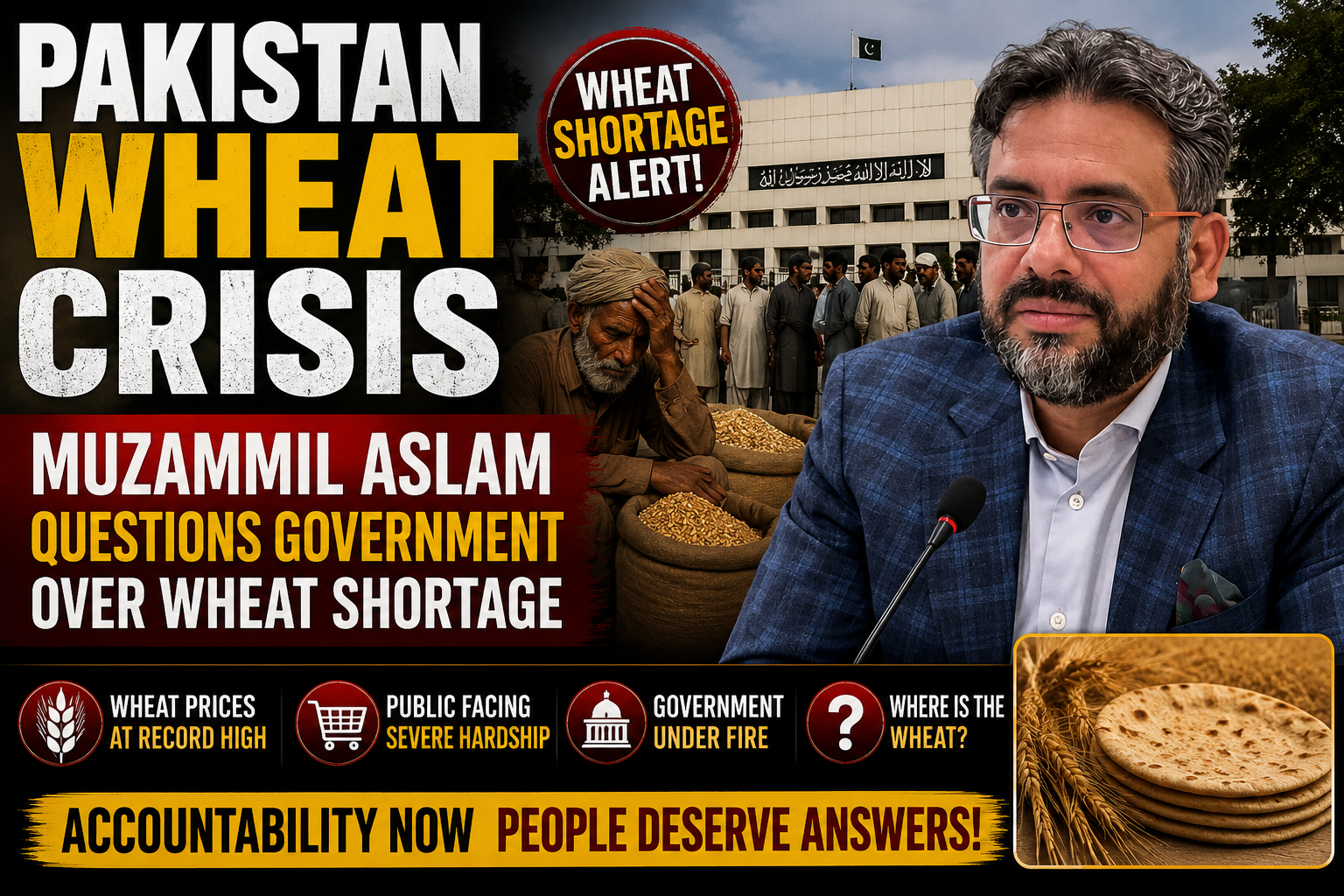
Pakistan Wheat Crisis
PESHAWAR: The Pakistan Wheat Crisis has become a major political issue after Khyber Pakhtunkhwa Adviser to the Chief Minister on Finance, Muzammil Aslam, questioned how a wheat shortage could emerge despite official claims that the country has ample stocks.
Pakistan Wheat Crisis Raises Fresh Questions
Speaking to the media, Muzammil Aslam said that Pakistan had never experienced a wheat crisis during this time of the year. He noted that July had arrived after the harvest season, yet concerns over wheat availability continued to grow.
According to Aslam, Pakistan currently has around 32 million tonnes of wheat, while the country’s annual requirement stands at approximately 28 million tonnes.
“If the government’s figures are correct, then how has the Pakistan Wheat Crisis emerged?” he questioned.
Punjab and Sindh Criticized Over Wheat Targets
Muzammil Aslam claimed that both the Punjab and Sindh governments failed to achieve their wheat production targets. He further alleged that Punjab had imposed an unofficial restriction on wheat movement while simultaneously requesting wheat supplies from PASSCO.
He described Punjab’s request for wheat from PASSCO as surprising and said it raised serious concerns about the country’s wheat management system.
Farmers Facing Financial Losses
The KP finance adviser said Pakistani farmers continue to suffer financially despite producing essential food crops.
He argued that while farmers in many countries earn sustainable incomes, Pakistani farmers are struggling due to inadequate agricultural policies. According to Aslam, promoting agriculture has not been among the federal government’s top priorities.
Concerns Over Fuel Prices
Alongside the Pakistan Wheat Crisis, Aslam also criticized rising petroleum prices, saying diesel and petrol costs had reached record levels and could increase further.
He remarked that Petroleum Minister Ali Pervaiz Malik was repeatedly defending government policies but claimed the overall situation remained unchanged.
Questions Over Daily Fuel Pricing Mechanism
Commenting on the new fuel pricing mechanism, Aslam warned that publishing pricing details on Ogra’s website could create opportunities for market manipulation.
He also questioned how oil marketing companies and petrol pump owners would manage operations under the new daily pricing system.
Conclusion
The Pakistan Wheat Crisis continues to generate debate as officials and political leaders offer conflicting assessments of wheat availability. While the government maintains that sufficient wheat stocks exist, opposition voices argue that poor planning, weak agricultural policies, and distribution challenges are creating unnecessary shortages.

Comments
Leave a Comment