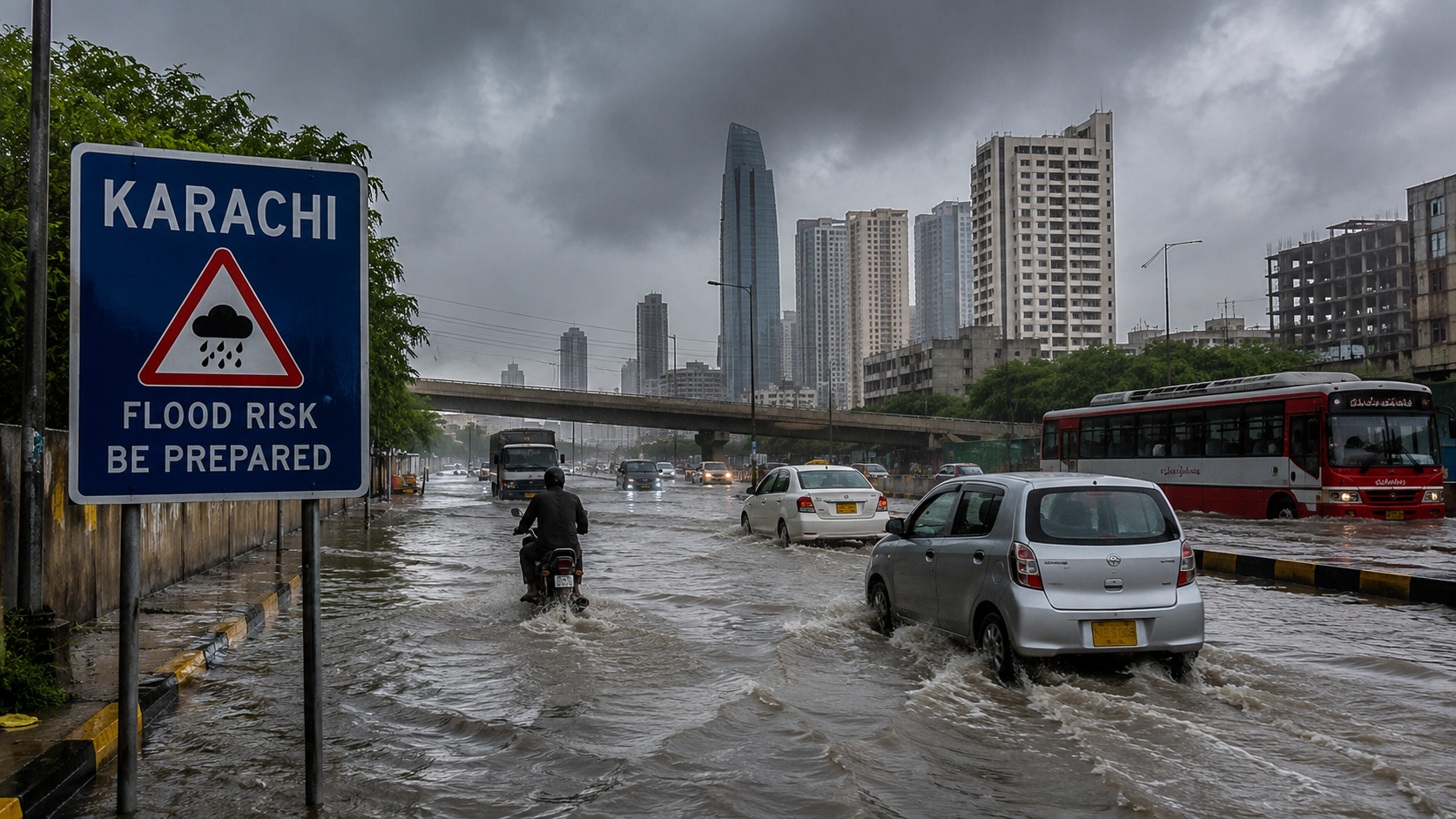
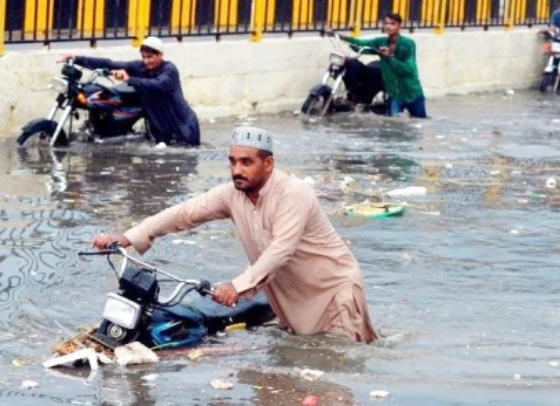
Karachi Monsoon Flood Risk is once again in focus as the city prepares for the 2026 monsoon season. Although the Pakistan Meteorological Department (PMD) has forecast below-normal rainfall between July and September, experts warn that Karachi remains highly vulnerable to urban flooding due to poor drainage infrastructure, blocked storm-water channels, and decades of unplanned urban development.
Authorities have started annual drain-cleaning operations, but environmental specialists believe the city’s long-term flood management strategy remains inadequate.
Experts Warn Annual Drain Cleaning Is Not Enough
Environmental experts argue that Karachi’s yearly drain-cleaning campaign offers only temporary relief while consuming significant public funds.
Yasir Hussain, Director of the Climate Action Centre, emphasized that the city urgently needs sustainable rainwater management instead of relying solely on clearing drains every monsoon season.
He recommended:
- Large-scale rainwater harvesting systems
- Injection wells to recharge groundwater
- Rooftop rainwater storage facilities
- Construction of small water reservoirs
- Restoration of natural waterways
- Removal of encroachments from storm-water drains
According to Hussain, these measures would not only reduce flooding but also improve Karachi’s long-term water security.
Poor Urban Planning Has Increased Flooding Risks
Regional planner Dr. Syed Nawaz-ul-Huda said Karachi’s flooding problems are the result of decades of unchecked urban expansion.
He explained that the city’s natural drainage network, which once directed rainwater through the Lyari and Malir rivers into the Arabian Sea, has been severely damaged by:
- Illegal construction
- Encroachments on drainage channels
- Unauthorized sewer connections
- Improper waste disposal
- Rapid urbanization
As a result, even moderate rainfall can overwhelm the city’s drainage system and flood roads, homes, and commercial areas.
Areas Most Vulnerable During the Monsoon
According to the Karachi Metropolitan Corporation (KMC), several major locations remain highly susceptible to waterlogging during heavy rainfall.
Some of the most affected areas include:
- Tower
- PIDC
- I.I. Chundrigar Road
- Nursery
- Karsaz
- Natha Khan
- FTC Flyover
- Airport (Falaknaz Area)
- Gurumandir
- Civic Centre
- NIPA Chowrangi
- Rashid Minhas Road
- Stadium Flyover
- Liaquatabad
- Karimabad
Other flood-prone neighborhoods include Surjani Town, Safoora Goth, Saadi Town, Palm Village, Gulshan-e-Iqbal, Saddar, PECHS, Korangi, Qayyumabad, Dhoraji, University Road, Gulistan-e-Jauhar, Lyari, Bolton Market, Soldier Bazaar, and several low-lying residential areas across the city.
Drain Cleaning Continues Across Karachi
KMC officials confirmed that the annual storm-water drain cleaning campaign began on June 29 and will continue until the end of September.
The civic body is currently responsible for maintaining:
- 45 major storm-water drains
- 512 smaller drains managed by various town administrations
Officials say work is ongoing to remove blockages before peak monsoon rainfall arrives.
Rainfall Forecast Still Calls for Caution
Although the PMD expects below-average rainfall this season, Karachi’s history shows that even 15 millimeters of rain can severely disrupt daily life.
Heavy waterlogging often leads to:
- Massive traffic congestion
- Business disruptions
- Road closures
- Damage to infrastructure
- Delays in emergency services
Experts warn that ongoing road construction projects and damaged roads could further worsen the situation.
Long-Term Solutions Needed
Climate experts believe Karachi cannot rely solely on seasonal drain cleaning. Instead, they recommend investing in modern urban flood management systems, strengthening local government institutions, enforcing anti-encroachment laws, and expanding rainwater harvesting infrastructure.
Without structural reforms, the Karachi Monsoon Flood Risk will continue to threaten millions of residents every rainy season, regardless of whether rainfall remains below normal.

Comments
Leave a Comment