India US Trade Talks:
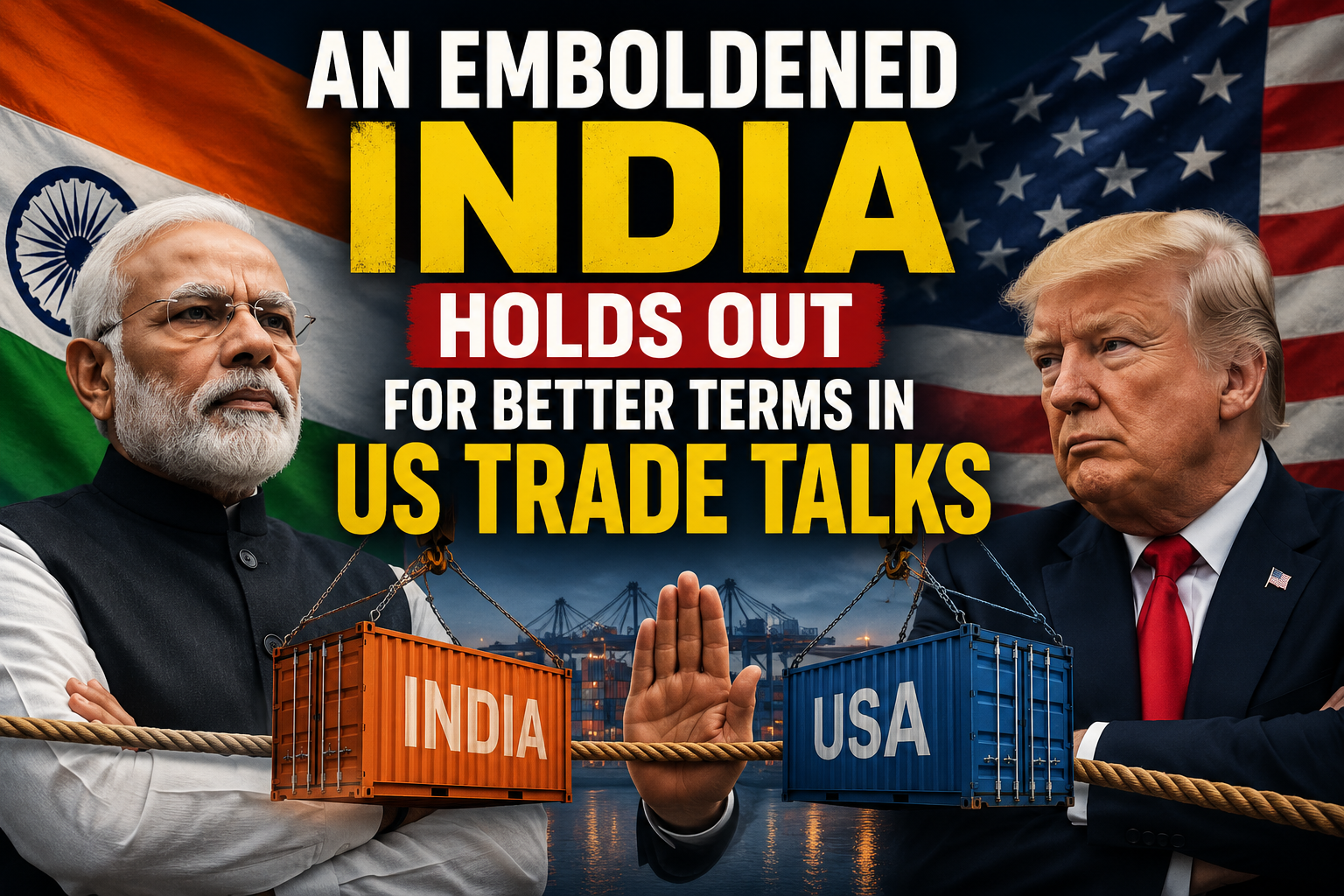
India is taking a firm position in its ongoing trade negotiations with the United States, choosing not to rush into an interim agreement unless it secures more favorable terms. According to officials and trade experts, New Delhi believes its improving economic position and expanding global trade partnerships have strengthened its bargaining power.
India US Trade Talks Reach a Temporary Deadlock
Recent discussions between Indian and U.S. officials ended without a breakthrough after both countries failed to finalize an interim trade agreement during the visit of U.S. Trade Representative Jamieson Greer to New Delhi.
Although expectations were high that a limited agreement could be reached, negotiations stalled because both sides were unable to agree on several key issues.
Indian officials insisted that any trade deal must provide meaningful economic benefits rather than simply meeting a deadline.
Why India Refused a Quick Agreement
According to government sources familiar with the negotiations, India believes the current U.S. proposal does not adequately address its major concerns.
New Delhi is seeking:
- Better tariff advantages compared to competing exporters such as China.
- Protection from additional U.S. tariffs after signing the agreement.
- No compromise on sensitive sectors, particularly agriculture.
- Fair treatment for Indian exporters in the American market.
Officials stated that India is prepared to continue negotiations but will not accept an agreement that does not protect its long-term economic interests.
United States Pushes for Faster Progress
The United States has been encouraging India to conclude a trade agreement quickly as the Trump administration prepares to introduce additional tariffs on imports from several countries later this month.
Washington reportedly expected India, one of its strategic partners, to make faster trade concessions.
However, U.S. officials also believe India must offer its own market access and policy concessions before receiving any special trade benefits.
Despite the slower pace of negotiations, U.S. officials remain optimistic that an agreement can eventually be reached.
Tariff Concerns Continue to Influence Negotiations
At present, most Indian goods exported to the United States are subject to a 10% tariff.
The U.S. administration is expected to announce additional tariff measures following investigations into industrial overcapacity and other trade concerns.
Washington has also proposed tariffs of up to 12.5% on products from several countries, including India, over allegations related to goods produced with forced labor.
India has rejected accusations regarding excess industrial capacity and continues to defend its manufacturing policies.
India’s Strong Economy Improves Its Negotiating Position
Trade analysts believe India now has greater confidence because its economy has remained resilient despite global uncertainty.
Several factors have strengthened India’s position:
- Goods exports increased by nearly 15% during the April–June quarter compared with the previous year.
- Exports to Gulf countries recovered strongly after temporary disruptions caused by regional conflict.
- Shipments to the United States also recorded steady growth.
- A weaker Indian rupee has improved the competitiveness of Indian exporters.
These developments have reduced pressure on India to finalize an immediate agreement.
Expanding Trade Partnerships Beyond the United States
India is also reducing its dependence on a single market by strengthening trade relationships with other major economies.
A free trade agreement with the United Kingdom is expected to take effect this month, while negotiations with the European Union continue to make progress.
Experts believe these alternative partnerships provide India with additional leverage during discussions with Washington.
Economic Outlook Supports India’s Strategy
Financial analysts have also pointed to improving economic conditions as a reason for India’s stronger negotiating stance.
Following easing tensions in the Middle East and lower global oil prices, India’s economic outlook has improved.
Goldman Sachs recently raised its 2026 growth forecast for India to 6.8% while lowering inflation and current account deficit estimates.
A healthier economy allows Indian negotiators to focus on securing better trade conditions rather than accepting a quick compromise.
What Happens Next?
Although negotiations have slowed, officials from both countries continue to engage in discussions.
The United States remains interested in reaching what it has described as a historic trade agreement, while India continues to emphasize that any final deal must deliver clear economic benefits and protect its key industries.
Trade experts believe further negotiations are likely in the coming weeks as both governments work to resolve differences over tariffs, market access, and long-term trade commitments.

Comments
Leave a Comment