Physical Address
304 North Cardinal St.
Dorchester Center, MA 02124
Physical Address
304 North Cardinal St.
Dorchester Center, MA 02124
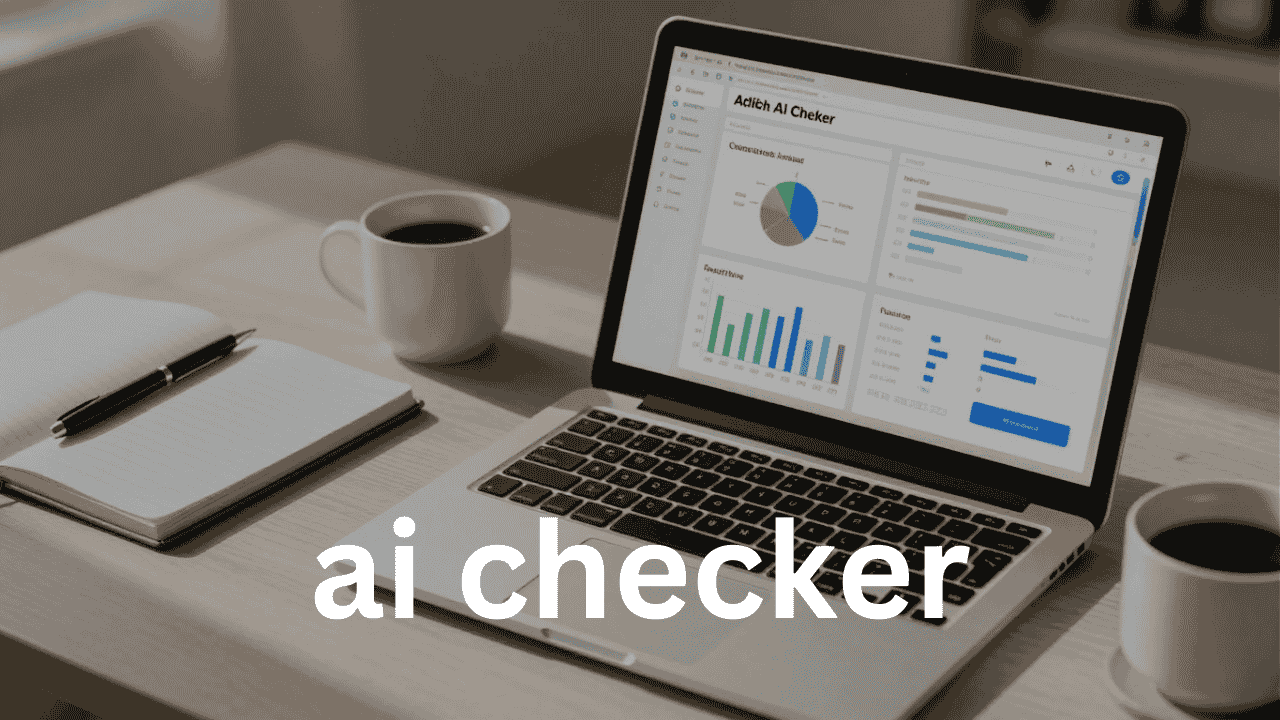
The digital writing landscape has evolved rapidly in recent years. Automated writing tools are now widely accessible, making it easier than ever to generate essays, blog posts, reports, and marketing copy within seconds. As this shift continues, concerns about authenticity and originality have grown. This is where an ai checker plays an important role.
An ai checker is designed to analyze text and determine whether it was written by a human or generated by automated systems. From schools and universities to marketing agencies and publishing houses, these tools are becoming part of daily workflows. In this comprehensive guide, we will explore what an ai checker is, how it works, why it matters, popular tools in the market, its limitations, ethical concerns, and future trends.
An ai checker is a detection tool that evaluates written content to estimate whether it was created by a person or generated using automated writing systems. It uses advanced language pattern analysis to identify characteristics commonly found in machine-produced text.
The growing importance of an ai checker can be linked to several factors:
For educators, an ai checker helps ensure students submit their own work. For businesses, it helps verify outsourced content. For publishers, it protects reputation. Authenticity has become more valuable than ever.
To understand the effectiveness of an ai checker, it is important to understand how it analyzes content. These tools rely on statistical modeling and language pattern recognition techniques to evaluate writing.
An ai checker typically examines:
Human writing often includes irregular sentence patterns, emotional variation, and unexpected phrasing. Machine-generated text tends to follow more predictable statistical patterns. An ai checker compares these patterns against trained models and produces a probability score.
Most tools provide results in the form of:
It is important to understand that an ai checker provides probability-based analysis rather than absolute confirmation.
Today’s ai checker platforms come with a wide range of features to meet different user needs. Some are designed for academic institutions, while others focus on marketers and publishers.
Common features include:
Some advanced platforms claim very high accuracy rates in controlled testing environments. Others focus on user-friendly interfaces and quick scanning capabilities.
Premium ai checker tools may also offer:
Choosing the right ai checker depends on your purpose, budget, and required accuracy level.
Several detection tools have gained recognition in recent years. Each ai checker platform offers different strengths and target audiences.
Some tools are widely used in educational institutions. Others are preferred by SEO agencies and content marketers. You will find platforms that:
Freemium models are common in this industry. Basic scanning is often free, while advanced features require subscription plans.
Because results can vary from one platform to another, many professionals compare multiple ai checker tools before relying on a single solution.
Educational institutions are among the primary users of ai checker tools. With automated writing platforms becoming easily accessible to students, teachers face new challenges in maintaining fairness.
An ai checker helps educators:
However, many institutions also acknowledge that no ai checker is perfect. False positives can occur, meaning genuine human writing may sometimes be flagged incorrectly. This is why many schools use detection results as supporting evidence rather than final judgment.
In the world of digital marketing, authenticity plays a key role in building trust. Brands want to maintain a consistent voice and avoid content that feels robotic or repetitive. An ai checker helps marketers evaluate whether content appears overly automated.
Content creators use an ai checker to:
Search engines increasingly prioritize helpful and human-focused content. While there is no confirmed penalty simply for automation, low-quality or repetitive content can harm rankings. This makes the ai checker a useful quality control tool.
Despite technological advancements, no ai checker is completely accurate. Detection systems rely on probability, not certainty. This leads to some challenges.
Common limitations include:
As writing systems evolve and become more sophisticated, distinguishing between human and automated writing becomes increasingly complex. This creates an ongoing cycle of improvement between content generation and detection technologies.
Many experts advise using an ai checker as a supporting tool rather than a final authority.
The use of an ai checker raises important ethical questions. Should students be penalized solely based on detection scores? Should writers disclose the use of writing assistance tools? How should businesses balance efficiency with authenticity?
Key ethical concerns include:
Responsible use of an ai checker requires clear policies and balanced judgment. Detection results should be part of a broader evaluation process rather than the only deciding factor.
The future of the ai checker industry is likely to involve greater accuracy and more advanced detection techniques. Developers are investing in improved statistical modeling and pattern recognition systems.
Future improvements may include:
At the same time, automated writing systems continue to improve. This ongoing development means the ai checker industry will continue evolving alongside content creation technologies.
Businesses, educators, and publishers will likely adopt more sophisticated systems as digital writing becomes even more common.
An ai checker has become an essential tool in today’s digital content environment. Whether used in education, marketing, publishing, or corporate communication, it serves as a verification system designed to protect authenticity and originality.
While no ai checker can guarantee perfect accuracy, it provides valuable insights into writing patterns and probability assessments. Understanding its strengths and limitations is crucial for responsible use.
As writing technologies continue to evolve, the role of the ai checker will remain significant. It will not replace human judgment, but it will continue to support decision-making processes where authenticity matters most.