Physical Address
304 North Cardinal St.
Dorchester Center, MA 02124
Physical Address
304 North Cardinal St.
Dorchester Center, MA 02124
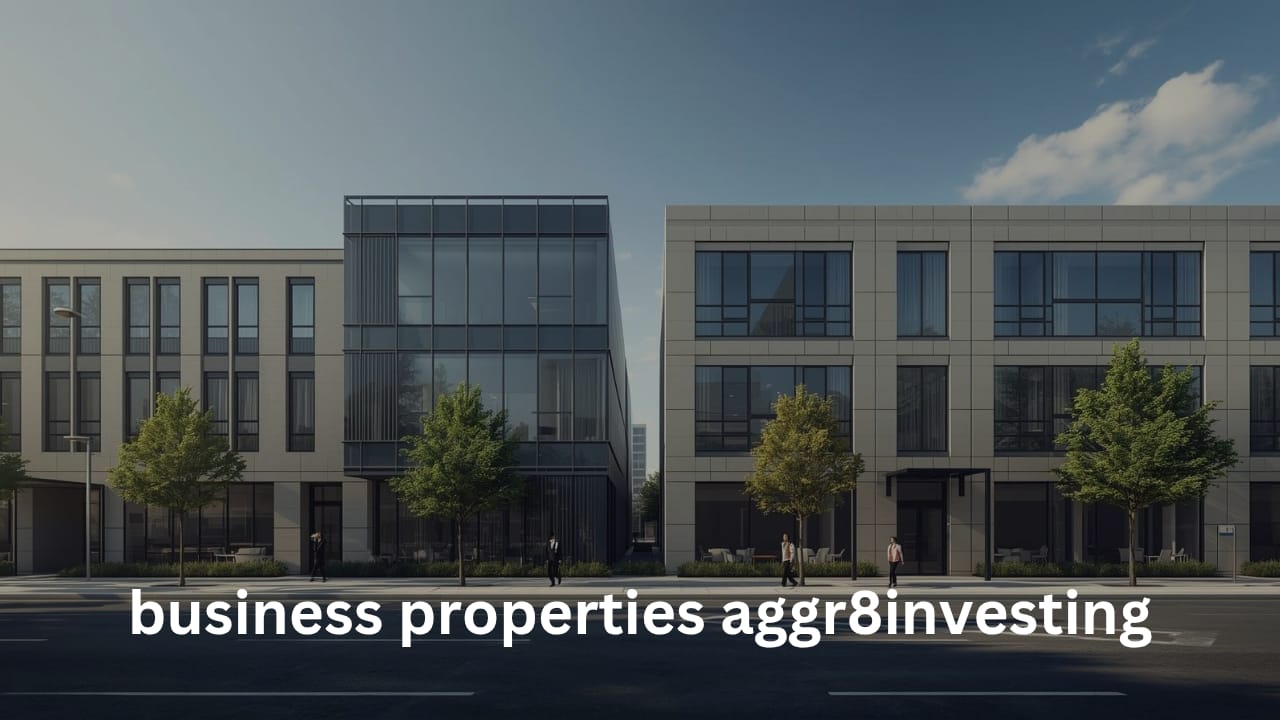
Business properties aggr8investing is a concept that centers on investing in commercial and business-oriented real estate with a structured, income-focused mindset. Unlike residential properties, which are often influenced by emotional buying decisions, this approach treats property purely as a financial asset. The rising interest in business properties aggr8investing comes from investors seeking steady cash flow, portfolio diversification, and long-term value growth through professionally evaluated business properties.
Commercial real estate has long been considered a strong wealth-building avenue, but without proper strategy it can also carry significant risk. Business properties aggr8investing emphasizes planning, analysis, and disciplined execution to help investors make informed decisions rather than speculative moves.
Business properties aggr8investing refers to an investment approach that focuses on properties used for commercial purposes such as offices, retail outlets, warehouses, logistics centers, and industrial units. These assets are leased to companies, brands, or service providers who rely on the space to conduct operations.
The value of these properties is typically determined by income potential rather than personal appeal. Rent consistency, tenant quality, lease duration, and operational efficiency play a central role. Business properties aggr8investing encourages investors to evaluate properties based on financial performance, long-term demand, and market stability instead of short-term market hype.
A wide range of assets can fall under the umbrella of business properties aggr8investing. Each type comes with its own advantages and considerations.
Common categories include:
• Office buildings used by corporate tenants
• Retail properties such as shopping plazas and standalone stores
• Industrial warehouses and manufacturing facilities
• Logistics and distribution centers
• Mixed-use developments combining commercial and business spaces
The diversity of property types allows investors following business properties aggr8investing to balance risk and returns by spreading capital across different sectors of the commercial market.
A defining feature of business properties aggr8investing is its emphasis on financial discipline. Investors are encouraged to rely on measurable indicators rather than assumptions or emotions. Cash flow analysis is a cornerstone of this approach, ensuring that income exceeds expenses while maintaining healthy margins.
Key financial aspects often evaluated include:
• Net operating income to measure profitability
• Operating expenses and maintenance costs
• Lease structures and rent escalation clauses
• Financing terms and debt obligations
• Long-term appreciation potential
By focusing on these fundamentals, business properties aggr8investing aims to reduce uncertainty and improve predictability in returns.
One of the primary attractions of business properties aggr8investing is consistent income generation. Commercial leases are usually longer than residential leases, often spanning multiple years. This provides investors with predictable revenue streams and reduced tenant turnover.
Business tenants are also more likely to invest in the property themselves through fit-outs and branding, making them more committed to staying long-term. This stability aligns well with the objectives of business properties aggr8investing, which prioritizes sustainable income over rapid speculation.
Location plays a critical role in the success of any commercial investment. Business properties aggr8investing stresses the importance of selecting properties in areas with strong economic activity, business demand, and infrastructure development.
Factors commonly considered include:
• Local business growth and employment trends
• Accessibility and transportation links
• Competition and vacancy rates
• Zoning regulations and future development plans
Through detailed market analysis, business properties aggr8investing helps investors identify areas where demand for commercial space is likely to remain strong over time.
Every investment carries risk, and commercial real estate is no exception. Business properties aggr8investing acknowledges this reality by encouraging proactive risk management. Instead of avoiding risk entirely, the strategy focuses on understanding and controlling it.
Potential risks include economic downturns, tenant defaults, market oversupply, and regulatory changes. Business properties aggr8investing addresses these risks through diversification, careful tenant screening, conservative financial assumptions, and ongoing performance monitoring.
Thorough due diligence is a core component of business properties aggr8investing. Before committing capital, investors are advised to examine both financial and operational aspects of a property in detail.
This process typically involves:
• Reviewing lease agreements and tenant history
• Verifying income statements and expense records
• Inspecting property condition and maintenance needs
• Assessing legal and compliance requirements
• Evaluating future growth potential
By following a structured evaluation process, business properties aggr8investing reduces the likelihood of unexpected issues after acquisition.
Another reason business properties aggr8investing has gained attention is the growing discussion around accessibility. Traditionally, commercial real estate required significant capital, limiting participation to large investors. Modern interpretations of business properties aggr8investing often highlight structured investment models that allow smaller investors to participate while still benefiting from professional analysis and management.
This evolving landscape has made commercial property investment more approachable, though investors are still encouraged to conduct independent research and verify information carefully.
Business properties aggr8investing offers several potential benefits when executed correctly. These advantages are largely tied to income stability and long-term performance.
Notable benefits include:
• Higher rental yields compared to residential assets
• Longer lease terms and reduced vacancy risk
• Stronger protection against inflation through rent adjustments
• Portfolio diversification beyond traditional investments
These factors contribute to the growing appeal of business properties aggr8investing among investors seeking reliable income and capital preservation.
Despite its benefits, business properties aggr8investing is not without challenges. Commercial properties often require higher initial investment, specialized knowledge, and professional management. Market cycles can also impact business tenants more directly during economic slowdowns.
Liquidity is another consideration, as commercial properties typically take longer to sell compared to residential units. Business properties aggr8investing encourages realistic expectations and careful planning to navigate these limitations effectively.
The long-term outlook for business properties aggr8investing remains closely tied to economic growth, urban development, and evolving business needs. As industries expand and adapt, demand for flexible and well-located commercial spaces continues to evolve.
Investors who follow the principles of business properties aggr8investing and remain adaptable to market changes are better positioned to sustain performance over time.
Business properties aggr8investing represents a structured and financially disciplined approach to commercial real estate investment. By focusing on income-generating assets, data-driven analysis, and long-term planning, this strategy offers a pathway for investors seeking stability and growth beyond traditional markets. While it requires careful research, patience, and risk awareness, business properties aggr8investing can play a valuable role in building a resilient and diversified investment portfolio when approached with clarity and responsibility.