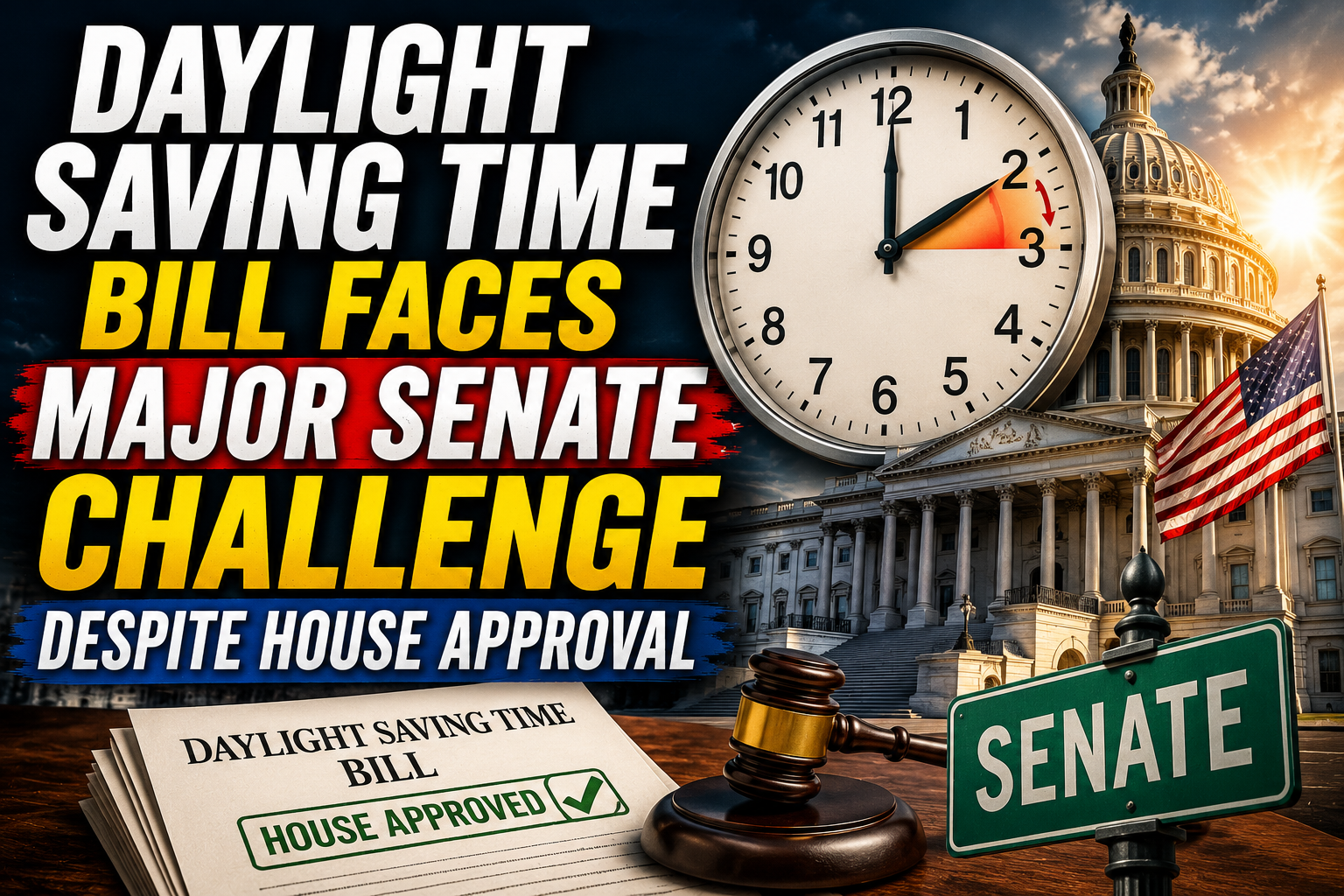
Daylight Saving Time Bill Meets Resistance in the Senate
A proposal to make Daylight Saving Time permanent in the United States is facing significant hurdles in the Senate, despite recently gaining approval in the House of Representatives.
While supporters argue that permanent daylight saving time would provide longer evening daylight and benefit businesses, recreation, and daily life, several senators continue to raise concerns about its broader impact.
Senate Opposition Could Slow the Bill
The legislation is expected to face a difficult path in the Senate, where some lawmakers remain unconvinced that making daylight saving time permanent is the best solution.
Critics have expressed concerns about public safety, particularly for schoolchildren who could be required to travel to school before sunrise during parts of the year. Others have questioned how the change might affect people who begin work early in the morning, including outdoor workers.
Because of these concerns, the bill may struggle to gain the broad bipartisan support needed for quick approval.
Supporters Say Permanent Time Change Has Benefits
Backers of the proposal believe keeping daylight saving time throughout the year would give Americans more daylight during the evening hours.
Supporters argue that additional evening sunlight could encourage outdoor activities, increase business for retailers and restaurants, and improve the overall quality of life for many families.
The proposal has attracted public attention in recent years as debates continue over whether the country should continue changing clocks twice each year.
White House Signals Support
The White House has indicated that President Donald Trump would support legislation making daylight saving time permanent.
Administration officials have described the proposal as a practical reform that reflects public interest in extending evening daylight while eliminating the need for seasonal clock changes.
Senate Vote Remains Uncertain
Although the measure has advanced in the House, its future now depends on whether Senate leaders can gather enough support to move the legislation forward.
Several lawmakers have suggested that the proposal may require additional debate before reaching a final vote, making its timeline uncertain.
Why the Debate Continues
The issue of daylight saving time has divided policymakers for years. Some experts believe ending the twice-yearly clock changes could reduce confusion and simplify daily routines, while others argue that permanent daylight saving time could create darker mornings during the winter months.
The debate balances convenience, public safety, health, and economic considerations, making it one of the more complex time-related policy discussions in Congress.
What Happens Next?
The Senate is expected to review the proposal in the coming weeks. If approved, the legislation would move closer to becoming law. However, if lawmakers remain divided, the bill could face delays or further revisions before any nationwide change takes effect.

Comments
Leave a Comment