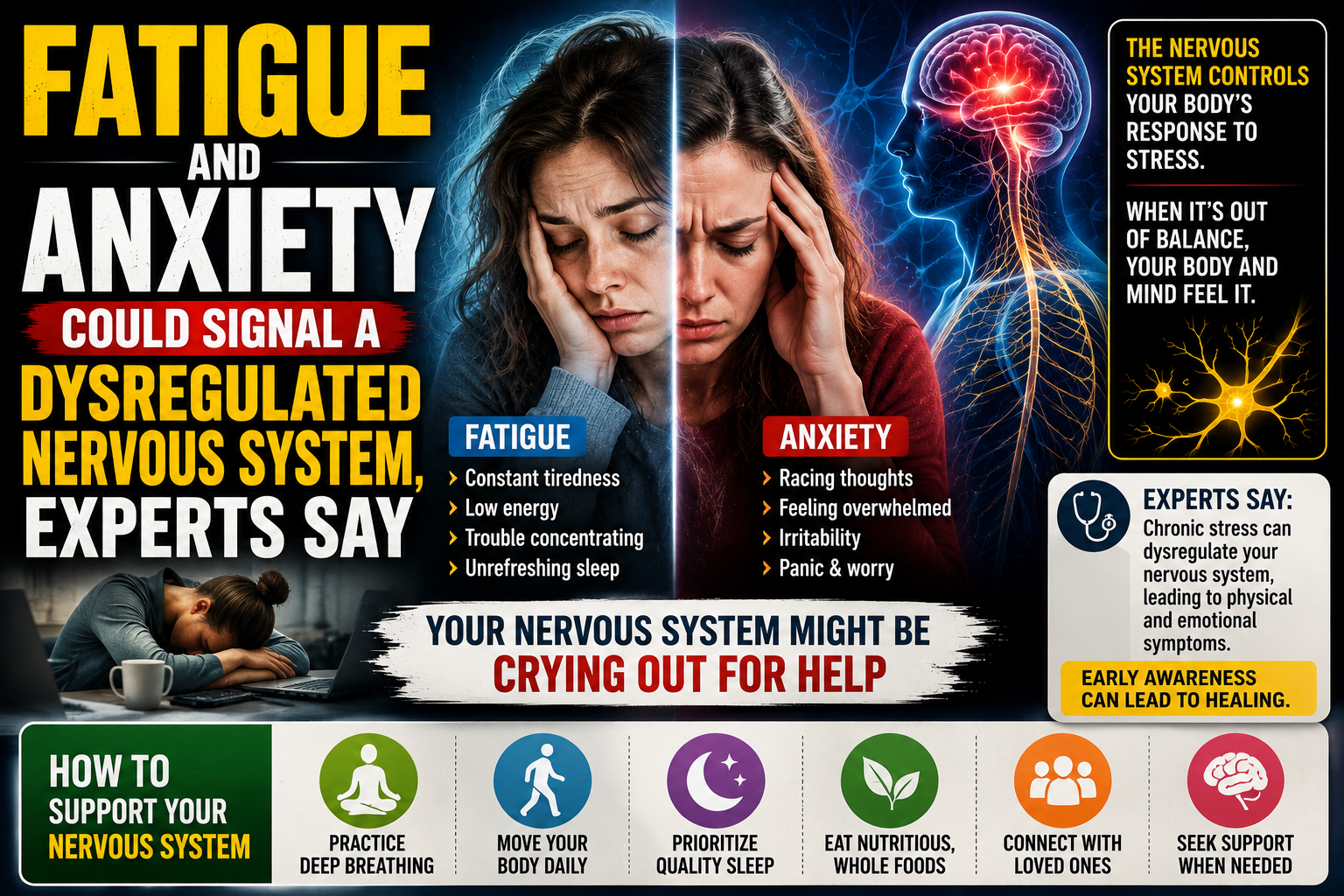
Dysregulated Nervous System
Feeling constantly tired despite getting enough sleep? Struggling with ongoing anxiety, muscle tension, or an inability to relax even when life seems calm? Health experts say these symptoms may point to a dysregulated nervous system rather than everyday stress.
While stress is a normal part of life, the body is designed to recover once a stressful event passes. However, for many people, that recovery process doesn’t happen properly, leaving the nervous system stuck in a constant state of alertness. This prolonged activation can affect both physical and mental health, making even routine daily tasks feel exhausting.
According to experts, recognizing the early signs of a dysregulated nervous system can help individuals take steps to restore balance before chronic stress leads to more serious health concerns.
What Is a Dysregulated Nervous System?
The autonomic nervous system controls many of the body’s automatic functions, including:
- Heart rate
- Blood pressure
- Digestion
- Breathing
- Body temperature
- Sweating
This system operates through two primary branches:
Sympathetic Nervous System
Often referred to as the body’s “fight-or-flight” system, this branch prepares the body to respond to danger by increasing heart rate, sharpening focus, and releasing stress hormones such as adrenaline.
Parasympathetic Nervous System
Known as the “rest-and-digest” system, this branch helps slow the heart rate, supports digestion, promotes healing, and allows the body to recover after stressful situations.
In a healthy individual, these two systems work together in balance. Stress activates the sympathetic system, while recovery activates the parasympathetic system.
A dysregulated nervous system occurs when the body remains trapped in survival mode and struggles to switch back into its natural recovery state.
Why Does the Nervous System Become Dysregulated?
According to Dr. Justin Anderson, a sports psychologist, the nervous system is built to respond to threats temporarily—not permanently.
When stress becomes chronic, the brain may continue interpreting everyday situations as potential dangers, even when no immediate threat exists. Over time, the body remains in a heightened state of alertness, continuously releasing stress hormones and limiting its ability to relax.
Several factors may contribute to nervous system dysregulation, including:
- Long-term workplace stress
- Financial pressures
- Relationship difficulties
- Traumatic experiences
- Chronic anxiety
- Poor-quality sleep
- Overworking without adequate recovery
- Ongoing health conditions
Common Signs of a Dysregulated Nervous System
The symptoms often develop gradually, making them easy to mistake for normal stress or burnout.
Common warning signs include:
- Constant fatigue that sleep doesn’t improve
- Persistent anxiety or nervousness
- Tight jaw or muscle tension
- Shallow or rapid breathing
- Racing thoughts
- Difficulty relaxing
- Trouble falling or staying asleep
- Digestive discomfort
- Rapid heartbeat or heart palpitations
- Feeling constantly “on edge”
- Increased sensitivity to noise or crowded environments
- Irritability and mood swings
- Brain fog and poor concentration
If these symptoms continue long after a stressful event has ended, experts say they may indicate chronic nervous system dysregulation.
How to Help Regulate the Nervous System
Experts recommend focusing on habits that encourage the body to shift from survival mode into recovery mode.
Practice Slow, Deep Breathing
Controlled breathing exercises can activate the parasympathetic nervous system, helping slow the heart rate and reduce feelings of anxiety.
Prioritize Quality Sleep
Maintaining a consistent sleep schedule and limiting screen time before bed can support nervous system recovery.
Exercise Regularly
Moderate physical activity such as walking, swimming, cycling, or yoga can improve stress resilience without overwhelming the body.
Reduce Chronic Stress
Mindfulness meditation, spending time in nature, journaling, and setting healthy work-life boundaries may help lower long-term stress levels.
Eat a Balanced Diet
Nutritious meals that include whole grains, lean proteins, healthy fats, fruits, and vegetables provide the nutrients needed for optimal nervous system function.
Stay Socially Connected
Meaningful relationships and supportive conversations can help reduce stress hormones and promote emotional resilience.
Seek Professional Support
If symptoms persist or interfere with daily life, consulting a healthcare professional or mental health specialist can help identify underlying causes and develop an appropriate treatment plan.
When to Seek Medical Advice
While occasional stress is normal, persistent fatigue, anxiety, chest discomfort, heart palpitations, severe sleep disturbances, or ongoing digestive issues should not be ignored. These symptoms can sometimes be associated with other medical conditions that require professional evaluation.
A healthcare provider can determine whether symptoms are related to nervous system dysregulation or another health issue and recommend evidence-based treatment options.
The Bottom Line
A dysregulated nervous system is more than simply feeling stressed. When the body remains stuck in a prolonged state of fight-or-flight, it can affect energy levels, emotional well-being, sleep quality, and overall health.
Recognizing the warning signs early and adopting healthy recovery habits—such as quality sleep, regular movement, stress management, and professional support when needed—can help restore balance and improve both physical and mental well-being over time.
Israel Faces Mounting Pressure Over Detention of Gaza Hospital Director Dr. Hussam Abu Safiya

Comments
Leave a Comment