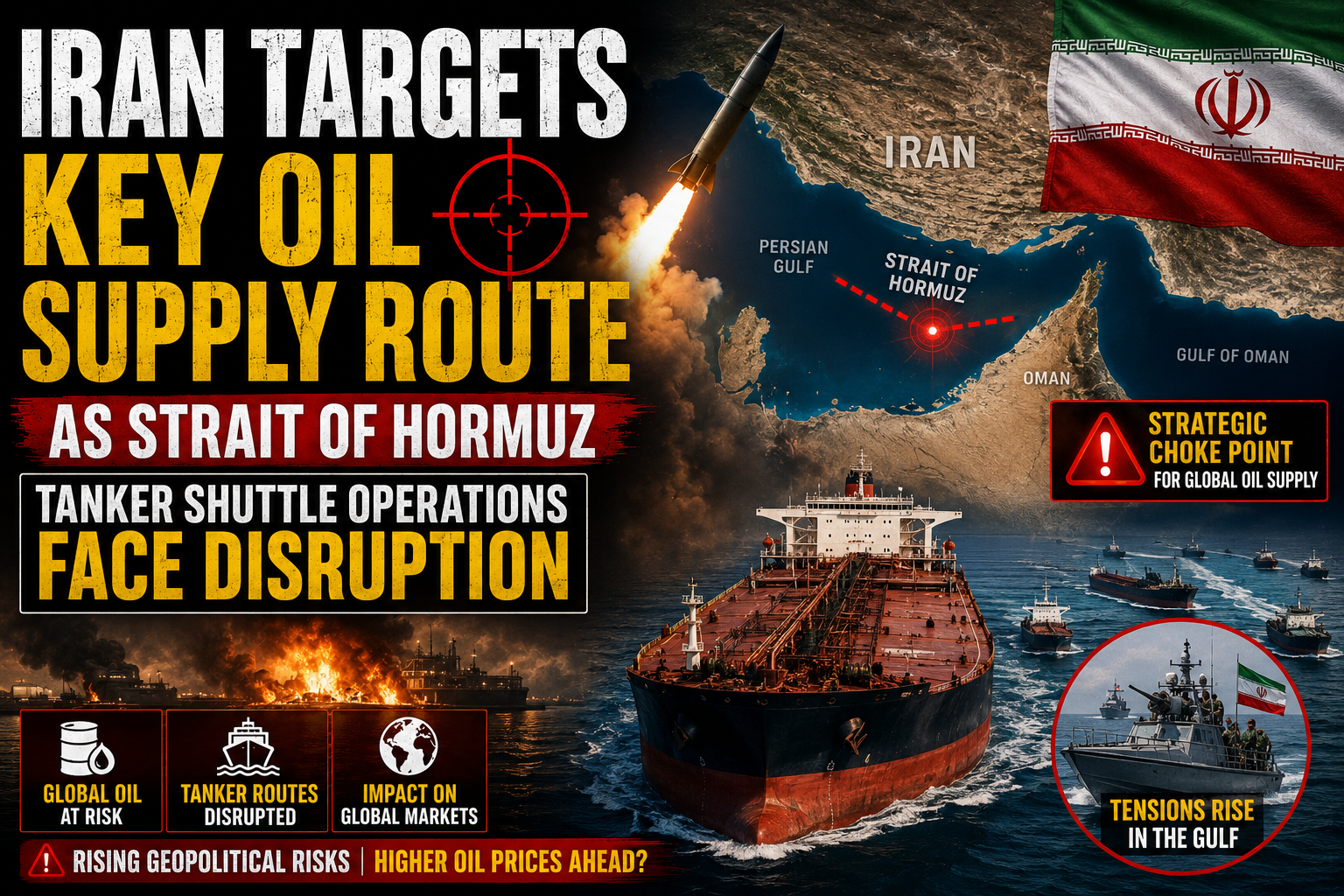
Fresh Disruptions Raise Concerns Over Global Energy Supplies
Strait of Hormuz Tanker Shuttle Operations
Tensions in the Middle East have intensified after Iran took steps that disrupted tanker shuttle operations in the Strait of Hormuz, one of the world’s most important oil transit routes. The latest developments have sparked concerns across global energy markets, as shipping companies closely monitor security risks in the region.
The Strait of Hormuz serves as a critical gateway connecting the Persian Gulf with international waters. Every day, millions of barrels of crude oil and petroleum products pass through this narrow waterway, making any disruption a significant concern for oil-importing nations.
Tanker Shuttle Operations Experience Delays
According to shipping industry reports, tanker shuttle operations have slowed as vessels adopt additional safety measures before entering the strategic waterway. Some shipping companies have adjusted sailing schedules, while others are waiting for updated security assessments before allowing tankers to transit the area.
Industry analysts say that even temporary interruptions can increase transportation costs, delay fuel deliveries, and create uncertainty in global oil markets.
Global Oil Markets React
The renewed security concerns immediately attracted the attention of international investors. Oil prices showed increased volatility as traders evaluated the possibility of longer disruptions in maritime transportation.
Energy experts note that the Strait of Hormuz handles nearly one-fifth of the world’s seaborne oil trade. Any prolonged instability could affect supply chains and influence fuel prices in countries that depend heavily on Gulf oil exports.
Shipping Companies Increase Precautions
Maritime operators have reportedly strengthened security protocols for vessels traveling through the Gulf region. Tankers are maintaining closer communication with naval authorities while monitoring developments before entering high-risk zones.
Insurance providers are also reviewing potential risks associated with voyages through the area, which could lead to higher shipping insurance premiums if tensions continue.
Strategic Importance of the Strait of Hormuz
The Strait of Hormuz remains one of the most strategically important maritime passages in the world. Major oil-producing countries, including Saudi Arabia, Iraq, Kuwait, the United Arab Emirates, and Qatar, rely on this route to transport energy exports to international markets.
Because such a large share of global oil flows through this corridor, even short-term disruptions can have far-reaching economic consequences.
International Community Closely Watching Situation
Governments and international organizations continue to monitor developments as diplomatic efforts seek to prevent further escalation. Market observers believe that stability in the Strait of Hormuz will remain a key factor influencing global energy prices in the coming days.
For now, tanker operators, oil traders, and governments are carefully assessing the evolving situation while preparing contingency plans should disruptions continue.

Comments
Leave a Comment