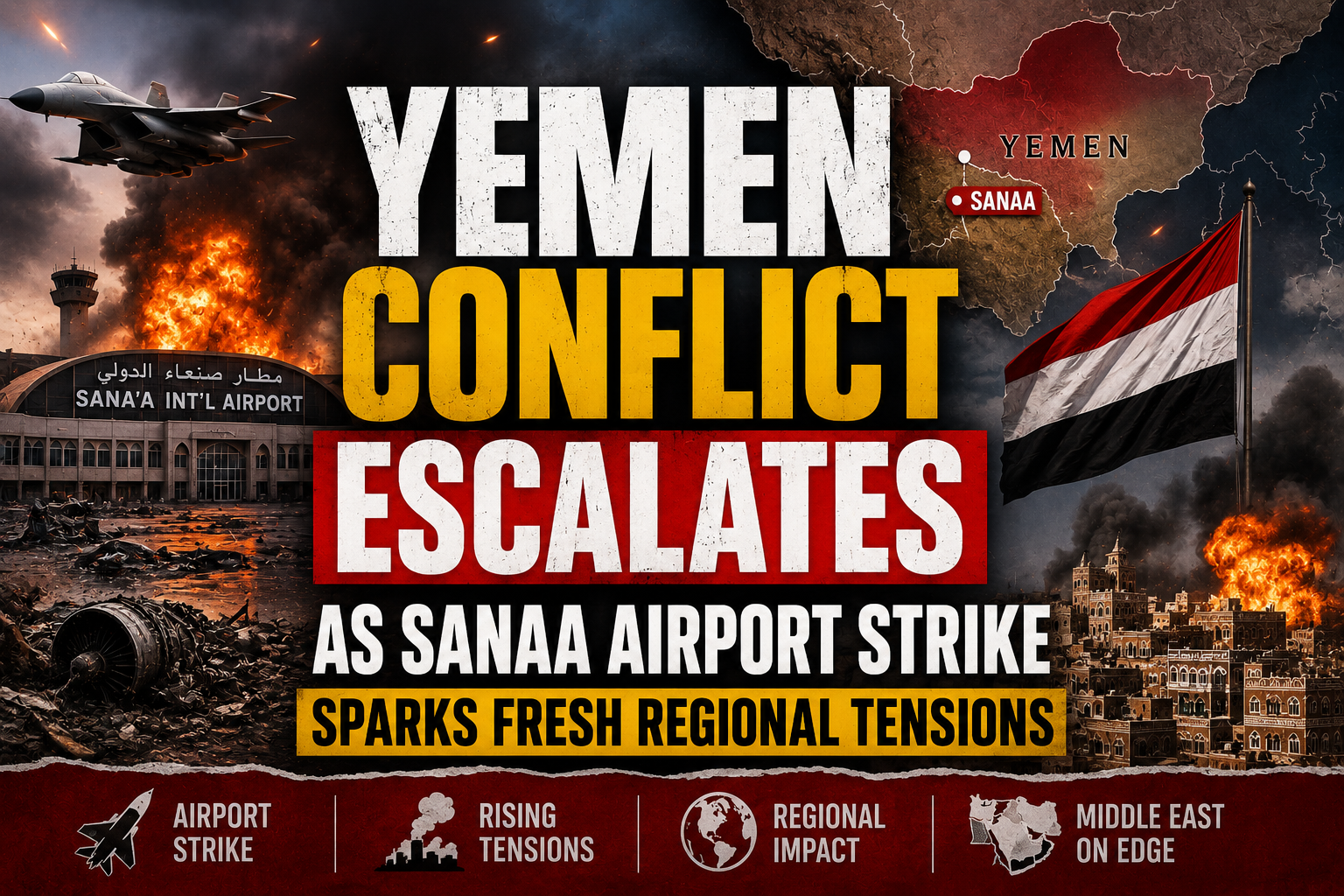
Yemen Conflict Deepens After Airport Strike
The security situation in Yemen has taken another serious turn after military action near Sanaa International Airport and retaliatory missile launches increased fears of a wider regional confrontation. The latest developments have raised concerns among regional governments and international observers, who worry that the fragile calm seen in recent years could quickly deteriorate.
Officials from Yemen’s internationally recognized government said military forces targeted the runway at Sanaa International Airport to stop an aircraft they believed was arriving from Iran. Government representatives argued that the operation was intended to prevent what they described as an unauthorized flight from entering territory controlled by the Houthi movement.
Government Explains the Military Operation
Authorities stated that precautionary measures were taken before the operation, including warnings advising civilians, airport staff, humanitarian organizations, and diplomatic personnel to avoid the airport area. Officials maintained that the action was carried out for security reasons and formed part of broader efforts to protect Yemen’s airspace.
The airport has remained a sensitive location throughout the country’s long-running conflict because it serves areas controlled by the Houthis. Any military activity involving the airport immediately attracts international attention due to its humanitarian importance.
Houthis Announce Retaliatory Action
Following the airport strike, the Houthi movement announced retaliatory military operations. The group claimed responsibility for launching missiles and drones toward targets in Saudi Arabia, saying the attacks were a response to what it described as aggression against Yemen.
Saudi authorities later confirmed that their air defense systems had been activated to respond to incoming threats. Officials stated that defensive measures successfully intercepted projectiles before they could reach their intended targets.
The exchange of military actions has increased fears that cross-border attacks could once again become more frequent after a period of reduced hostilities.
Iran Condemns the Strike
Iran strongly criticized the military operation at Sanaa airport, describing it as a violation of international principles and Yemen’s sovereignty. Iranian officials called for respect for international law while rejecting accusations regarding interference in Yemen’s internal affairs.
The statements added another diplomatic dimension to an already complicated regional crisis, where political disagreements continue alongside military developments.
Humanitarian Concerns Continue to Grow
The latest escalation has also raised concerns about Yemen’s ongoing humanitarian crisis. International aid organizations have repeatedly warned that renewed fighting could disrupt relief operations and make conditions even more difficult for millions of civilians already facing shortages of food, healthcare, and essential supplies.
Airports, ports, and transportation routes remain critical for delivering humanitarian assistance, making any military activity around these facilities particularly sensitive.
Why the Yemen Conflict Matters
The Yemen conflict has continued for more than a decade and remains one of the Middle East’s most complicated political and military crises. Different regional powers have supported opposing sides, turning the conflict into a wider geopolitical issue.
Control of key cities, strategic ports, and transportation routes has remained central to the conflict. Any increase in military activity raises concerns about regional security, international shipping, and diplomatic stability.
International Community Calls for Restraint
Several international organizations and governments have urged all parties to avoid further escalation and return to diplomatic dialogue. Analysts warn that continued military exchanges could undermine previous efforts aimed at reducing violence and supporting peace negotiations.
Diplomatic observers believe preventing further escalation will require cooperation between regional stakeholders and renewed international mediation.
What Could Happen Next?
Security experts believe the coming days will be important in determining whether the situation stabilizes or develops into a broader regional confrontation. Military activity around strategic infrastructure, including airports and border areas, will likely remain under close observation.
Governments across the Middle East continue monitoring developments while international agencies emphasize the importance of protecting civilians and maintaining humanitarian access.

Comments
Leave a Comment